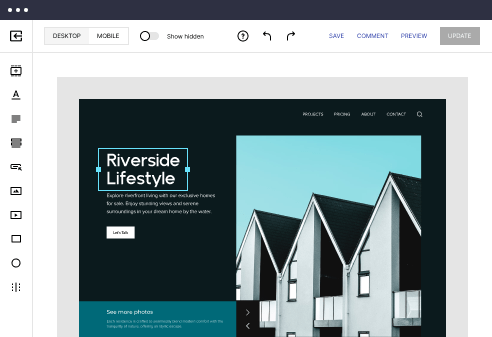

Vue.js optimized shipping page template
Explore Similar TemplatesAbout template
Supercharge your shipping page with Vue.js for outstanding performance! Learn more today.
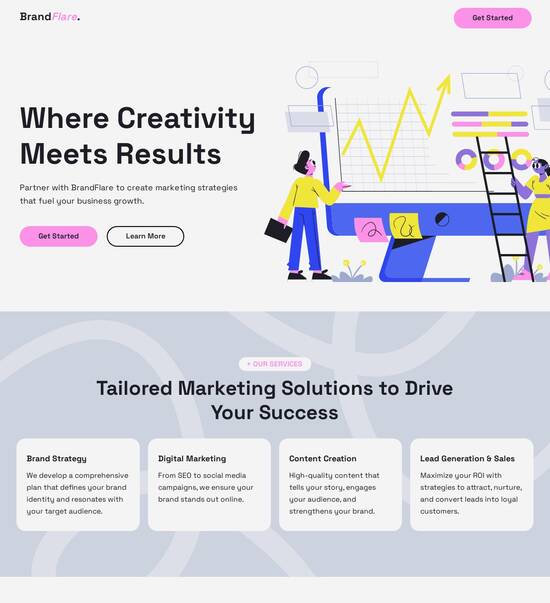
Recommended templates


Easy to build without coding
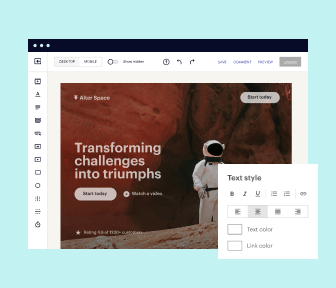
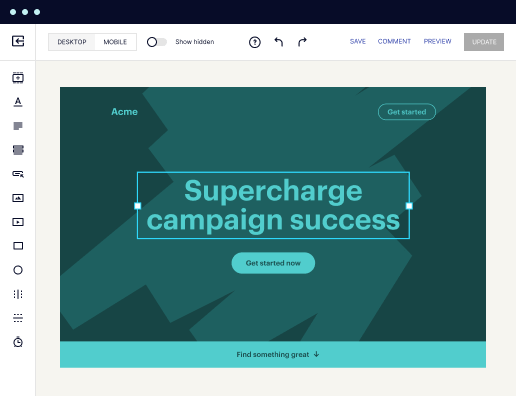
With the intuitive drag-and-drop builder, anyone on your team can create high-converting pages without any knowledge of code or design. Make enhancements to your landing page with custom widgets using Javascript, HTML/CSS, or third-party scripts.
Multiple layouts for any industry and goal
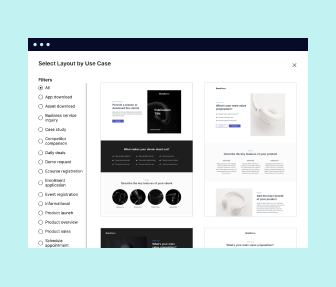
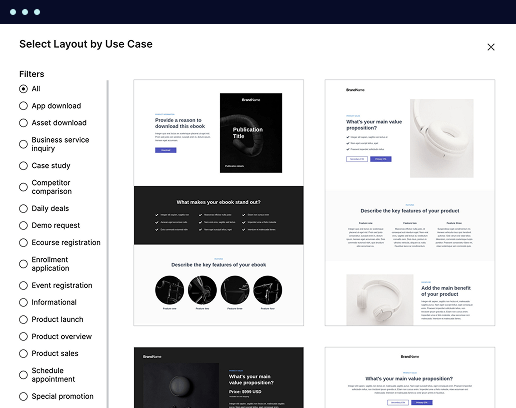
Select from 500+ landing page layouts built to boost conversions across industry-specific scenarios. Customize them by adjusting fonts, adding images, and generating on-brand content with the AI assistant. Quickly scale with Instablocks® and Global Blocks that you can save, reuse, and update globally.
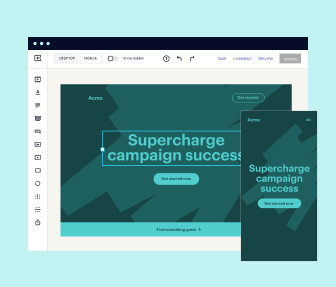
Loads fast and looks polished on any device
Every template is responsive, which means they present professionally on any device and load blazingly fast with our Thor Render Engine. You can also power them up with Google AMP technology to deliver an unparalleled mobile experience and drive higher conversions.
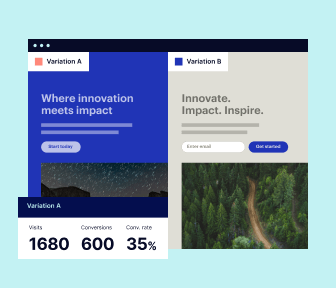
Robust analytics & experimentation
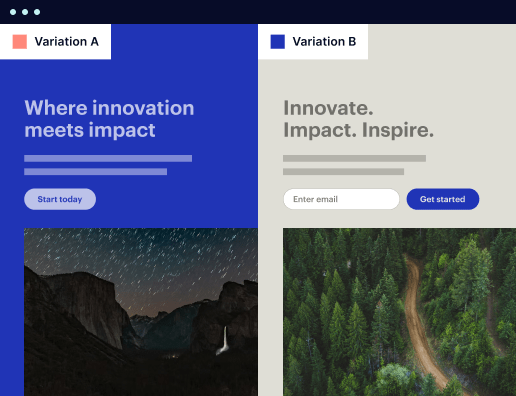
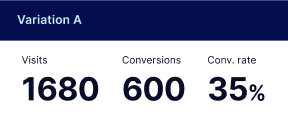
Get real-time updates and reporting across all your devices, showing the number of visitors, conversions, cost-per-visitor, and cost-per-lead. Launch AI-powered experiments, run A/B tests, and use heatmaps to analyze user behavior, then optimize your landing page to maximize conversions.
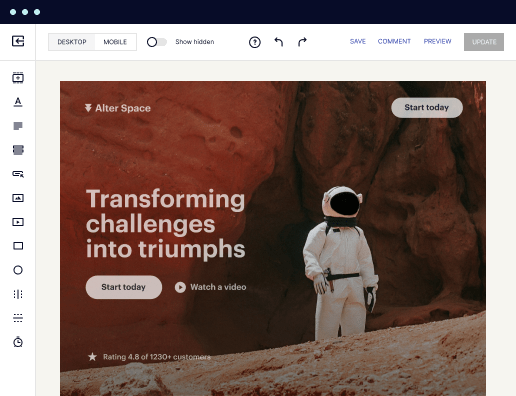

Easy to build without coding
With the intuitive drag-and-drop builder, anyone on your team can create high-converting pages without any knowledge of code or design. Make enhancements to your landing page with custom widgets using Javascript, HTML/CSS, or third-party scripts.
Multiple layouts for any industry and goal
Select from 500+ landing page layouts built to boost conversions across industry-specific scenarios. Customize them by adjusting fonts, adding images, and generating on-brand content with the AI assistant. Quickly scale with Instablocks® and Global Blocks that you can save, reuse, and update globally.
Loads fast and looks polished on any device
Every template is responsive, which means they present professionally on any device and load blazingly fast with our Thor Render Engine.
Robust analytics & experimentation
Get real-time updates and reporting across all your devices, showing the number of visitors, conversions, cost-per-visitor, and cost-per-lead. Launch AI-powered experiments, run A/B tests, and use heatmaps to analyze user behavior, then optimize your landing page to maximize conversions.
All the features you need to build lead-generating landing pages

Landing page builder
Easily create landing pages with the intuitive drag-and-drop page builder that features contextual element editing, over 500 page layouts, and 33 million images.

Visual on-page collaboration
Invite teammates and clients to collaborate on page design in real time to get your pages created, reviewed, and launched faster.

AI content generation
Instantly generate audience-focused content with AI-crafted headlines, paragraphs, and CTAs directly within the Instapage builder.

500+ customizable layouts
Choose from a range of professionally tailored page layouts, specifically designed to enhance conversion rates across numerous industry-specific scenarios.
Instablocks
Quickly build personalized landing pages using individual page blocks that you can customize, save, and reuse.
Thor Render Engine
Our back-end technology ensures that your landing pages load quickly to increase conversions, SEO rankings, and enhance the overall user experience.
Analytics
Seamlessly connect to Google Analytics to get real-time updates on cost-per-visitor and cost-per-lead metrics directly in the Instapage platform.
Learn how to build top-performing landing pages for any goal
FAQs

“Instapage gives us the ability to tailor our landing page content and layout to tell a unique story for each geographical target. The platform also enables us to create different variations with content that performs well for each unique channel. Every marketing team needs this!”


"Instapage has truly maximized our digital advertising performance by enabling us to offer matching, personalized experiences for every ad and audience. Now we can scale our landing page experiences as efficiently and effectively as we scale the ads themselves."


"If we have to wait on a developer, our creative velocity plummets. But Instapage has made it possible for us to exponentially grow our advertising programs and convert more customers"

Leading the way in building high-performing landing pages





An effective landing page guide with Instapage
Creating high-converting landing pages is essential for maximizing your digital marketing campaigns. Instapage offers a powerful landing page and conversion rate optimization (CRO) platform that lets marketers build, test, and personalize their pages rapidly without the need for technical expertise. This step-by-step guide will help you harness the full potential of Instapage to accelerate your marketing efforts and improve your return on investment (ROI).
Understanding the importance of landing pages
Landing pages serve as the focal point for your online marketing campaigns. Their primary objective is to convert visitors into leads or customers through tailored experiences. Without effective landing pages, even the best marketing strategies may fail. Instapage allows you to create tailored experiences for diverse audience segments, ensuring that your pages resonate with their needs.
- High conversion rates: Well-designed landing pages can boost conversion rates significantly by aligning with user intent.
- Targeted campaigns: Use personalized content to appeal directly to different buyer personas within your audience.
- Data-driven insights: Instapage provides analytics and heatmaps that help you understand user behavior and optimize accordingly.
Step 1: Choose the right template
Instapage offers a library of over 100 high-converting templates that can serve as an excellent starting point. Choosing the right template is critical as it sets the foundation for your campaign's success.
Step 2: Customize your landing page
Once you've selected a template, it's time to make it your own. Consider the following key elements that enhance user experience:
- Headline: Craft an engaging headline that grabs attention and clarifies the value proposition.
- Images and visuals: Use high-quality images to create an emotional connection and illustrate your offers.
- Call-to-action (CTA): Make sure your CTA is clear, compelling, and visible above the fold.
Step 3: Optimize for conversions
To get the most out of your landing page, you need to continuously optimize it based on user interactions and performance.
- A/B testing: Experiment with different headlines, imagery, and CTAs to identify what resonates best with your audience.
- Heatmaps: Utilize heatmaps to visualize where users are clicking and how they're interacting with your content.
- Feedback loops: Collect user feedback to understand areas of improvement and adjustments necessary for optimizing the experience.
In conclusion, using Instapage as your landing page and CRO platform can drive remarkable results for your digital marketing initiatives. By following these steps and leveraging the tools available, you can effectively convert visitors into leads and increase your ROI.
Ready to transform your marketing campaigns with exceptional landing pages? Sign up for a free trial of Instapage today and see the difference for yourself!
Vue.js optimized shipping page template
Understanding Vue.js and its role in e-commerce development
Vue.js is a progressive JavaScript framework used for building interactive user interfaces and single-page applications. In the context of web application development, it allows developers to create efficient, reactive components that enhance user experience. Its component-based architecture makes it easier to build custom features for diverse e-commerce platforms.
As online shopping continues to expand, the need for optimized shipping page templates becomes increasingly vital. Shipping pages are crucial in showcasing delivery options, costs, and timelines, all of which directly influence customers' purchasing decisions. With Vue.js, developers can create flexible shipping solutions that cater to the unique needs of e-commerce businesses while ensuring a smooth user experience.
Vue.js effectively addresses common challenges in modern e-commerce development such as performance, scalability, and user engagement. It provides a lightweight framework with rapid rendering, making it a preferred choice for developers aiming to enhance shipping page performance without sacrificing usability.
Key features of Vue.js optimized shipping page templates
One of the standout qualities of Vue.js is its lightweight nature, which directly impacts performance. Given that page loading speed significantly affects user retention and conversion rates, shipping pages optimized with Vue.js enable faster load times, ensuring that customers can access information swiftly. By focusing on proper bundle size considerations, developers can minimize the amount of JavaScript that needs to be loaded, creating a more efficient loading experience.
A fast-loading shipping page is not just a luxury; it's a necessity in today’s fast-paced online retail landscape. When users encounter delays, they are more likely to abandon their carts. Optimized templates using Vue.js can reduce latencies through efficient rendering techniques, keeping users engaged throughout their shopping journey.
Reactive components for dynamic user experience
Vue.js excels in creating reactive components that provide real-time updates, a critical feature for shipping pages. This allows users to see instant changes, such as shipping costs that alter based on the selected delivery method or location inputs while they fill out forms. By leveraging such capabilities, businesses can enhance user engagement and satisfaction.
The benefits of a reactive interface become even clearer when users are tracking their orders. Offering customers timely and dynamic notifications about their shipments ensures they are always informed, ultimately building trust and enhancing the overall user experience.
Enhancing user experience with Vue.js
Creating a streamlined checkout process is essential for minimizing user friction on shipping pages. The overall goal should be to provide a seamless experience from cart to confirmation. Optimized features such as autofill for shipping details and clear cost breakdowns help to eliminate confusion and expedite transactions. Reducing unnecessary steps can lead to higher conversion rates, as customers are more likely to complete purchases when the process feels easy and intuitive.
Visual appeal plays a critical role as well. A flexible design utilizing Vue.js allows developers to customize layouts that reflect brand identity and resonate with target audiences. Intuitive component libraries enable marketers to create visually engaging elements without cumbersome coding, focusing instead on usability and aesthetics.
Customized delivery options
Responsive design for various devices
User-friendly interfaces for enhanced navigation
Clear communication of shipping policies
Optimizing shipping page performance
Leveraging server-side generation (SSG) is one strategy that Vue.js developers can utilize to enhance the performance of shipping pages. SSG allows applications to generate HTML at build time rather than at runtime, leading to a significant reduction in load times. This not only improves user experience but also boosts SEO, helping businesses to rank better in search engine results.
By adopting a performance-oriented approach, Vue.js-based shipping pages can load faster, effectively capturing users' attention. SSG makes content readily available, allowing search engines to index pages efficiently, leading to increased visibility.
Efficient data management practices
Handling shipping data effectively is crucial in maintaining optimal performance. Vuex, the state management library for Vue.js, enables developers to manage the state of a shipping page efficiently. With Vuex, you can centrally manage data flows, reducing the need for excessive API calls that can slow down performance. By ensuring that only necessary information is fetched, developers enhance the user experience while keeping loading times minimal.
Development services tailored for shipping pages
Investing in custom development solutions with Vue.js can significantly enhance the shipping page experience. Tailored development services include creating components that meet specific business needs, such as custom tracking interfaces or integration with logistics partners that improve transparency. Hiring expert developers ensures that these solutions are optimized for performance and usability.
Integration with third-party shipping services is another critical aspect. There are various logistics APIs that can streamline shipping processes, providing real-time tracking and allowing for accurate shipping cost calculations. Importantly, businesses must focus on data synchronization between their systems and these third-party services to enhance performance and reliability.
The impact of JavaScript on e-commerce shipping pages
JavaScript is fundamental in boosting functionality on shipping pages. Its asynchronous operations allow certain processes to run while other processes are loading—this leads to a more seamless user experience. Users are less likely to notice load times as they interact with elements on the page, striking a balance between performance and usability.
Moreover, effective handling of JavaScript is crucial for enhancing SEO strategies on shipping pages. Vue.js efficiently manages content rendering to ensure that search engines can index pages accurately. This allows brands to maintain visibility in a crowded online marketplace, driving organic traffic and potential conversions.
Data-driven decision making for shipping pages
In an age where data-driven insights dominate decision-making, analytics tools play a pivotal role in monitoring shipping page performance. Tracking user interaction and behavior through sophisticated analytics helps businesses identify potential friction points, understand customer preferences, and adjust strategies accordingly.
Several analytics solutions cater specifically to e-commerce businesses, offering insights that shape improvements. Regularly measuring key performance indicators (KPIs) can inform design updates and product offerings on the shipping page to tailor the experience to user needs.
Utilizing user feedback to enhance service
Collecting user feedback is vital in driving continuous improvement on shipping pages. An effective feedback loop allows businesses to gather insights and suggestions directly from users experiencing the shipping process. Implementing changes based on user testimonials not only enhances satisfaction but also contributes to increasing conversion rates.
Future trends in optimized shipping pages
Emerging technologies influence how optimized shipping pages evolve over time. With advancements in Vue.js, we can expect more sophisticated templates that adhere to evolving customer expectations. Predictive elements will likely be integrated, delivering tailored experiences based on user behavior and preferences.
Artificial Intelligence (AI) is also poised to play an essential role in the future of e-commerce. AI could personalize user experiences by predicting shipping preferences or identifying new logistics partners. Chatbots and AI-driven recommendations can create tailored offerings, streamlining the overall customer experience.
Case studies of successful Vue.js shipping page implementations
Exploring successful case studies highlights the impact of optimized shipping pages on businesses in various industries. For example, companies that adopted Vue.js shipping templates often saw significant improvements in user engagement and conversion rates. Notable examples include retailers who integrated real-time tracking, which reduced customer queries and complaints about shipping.
Lessons learned from these implementations emphasize best practices like maintaining component reactivity and focusing on lightweight design. Each successful case study illuminates the potential that a well-crafted shipping page has in transforming the e-commerce user experience.
Testimonials from satisfied users
User feedback from those who adopted enhanced shipping experiences often commends the responsiveness and clarity of Vue.js templates. Many report significant drops in cart abandonment rates attributed to improved shipping interactions, showcasing how performance directly correlates with increased customer satisfaction. Listening to these insights helps businesses refine and enhance their shipping processes.
Crafting a future-ready shipping page template with Vue.js
Building an optimized shipping template with Vue.js requires careful planning and execution. Key considerations during the development phase should include understanding user needs, refining essential components, and ensuring responsiveness. A structured template typically incorporates elements such as tracking notifications, cost calculators, and user feedback forms.
Common pitfalls to avoid include overcomplicating the user interface and neglecting performance optimization. As shipping pages scale, retaining high performance is paramount. Developers should focus on efficient data loading strategies and leverage Vue’s capabilities to avoid common mistakes that degrade user experience.
Ready to skyrocket conversions?
Supercharge your ad campaigns with high-performing landing pages
Get started